7 Things You’ve Been Told About Recovery That Are Wrong

Read this BEFORE you add another hour to your week.
| HELIOS | Garmin Fenix 8 | TrainerRoad | |
|---|---|---|---|
| Sees every night | ✓ | ~ when worn | ✕ |
| Sees what you ate | ✓ | ✕ | ✕ |
| Updates sessions to suit your needs | ✓ | ✕ | ~ from ride files |
| Builds your nutrition plan | ✓ | ✕ | ✕ |
| THE VERDICT | ✓ | – | – |
| Proposes changes, you approve | ✓ | ✕ | ✕ |
| Bike computer in the app | ✓ | ✕ | ✕ |
| A coach you can talk to | ✓ | ✕ | ✕ |
Do you want to know why your cycling game isn’t improving? It’s simply because you are not recovering properly, and recovery today, what people think it is, people have been completely deceived. Recovery is three things at once: how you slept, how much load you’re carrying, and what you ate. Almost everything you can buy watches part of one of them. Here are the seven things riders get wrong.
Thinking It’s Your Legs, or Your Age
You keep doing the same thing, thinking you have to try harder. Or you think it’s because you’re getting older. It’s none of those. The ride is two hours. The other twenty-two hours of the day are where recovery happens, and nothing you own is watching them. When the number doesn’t move after consistent training, the training is landing on a body that isn’t absorbing it. That’s a recovery problem, and it looks exactly like a training problem from the outside.
See What Watches the Other 22 Hours →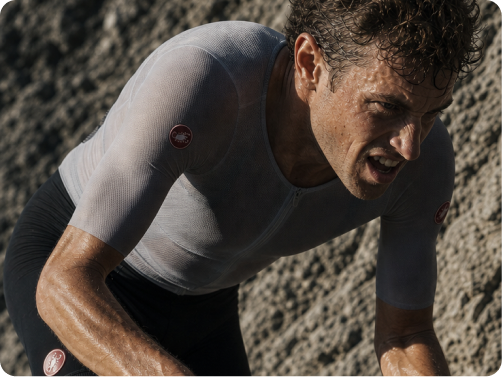
Thinking a Sleep Score Is Recovery
Recovery is not buying a generic health tracker and thinking you’re tracking your sleep. Sleep is one of three inputs. Europe’s and America’s sports-medicine bodies put out a joint statement on overtraining, and it says it directly: no single marker tells you where an athlete is. A sleep score on its own is a guess with a number on it, and a guess that says “ready” on the wrong morning costs you the block.
See All Three Inputs →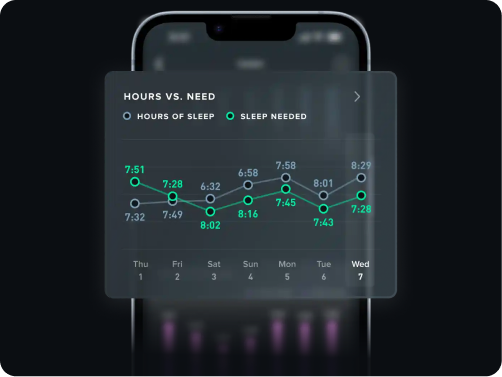
Waiting for Your Body to Tell You
A rider on r/cycling asked how to avoid overtraining and then admitted he can’t: he keeps going “until my body stops recovering,” and only finds out a week later when his legs feel weak. The body sends the signal days earlier, in the night: how you slept, how your heart settled. If nothing reads it, you get the message late, and late means a lost week.
See the Morning Number →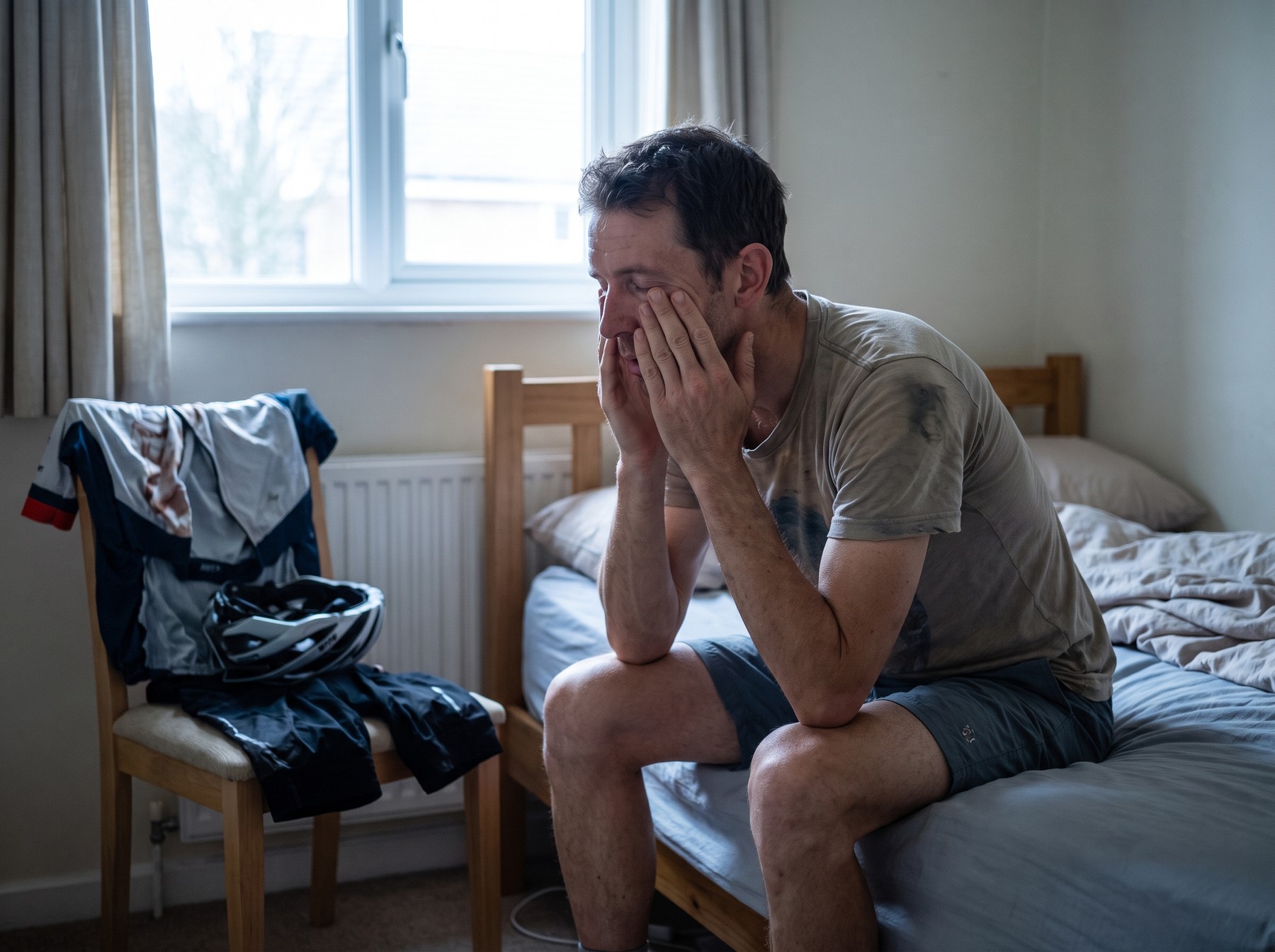
Running a Plan That Was Finished Before the Week Started
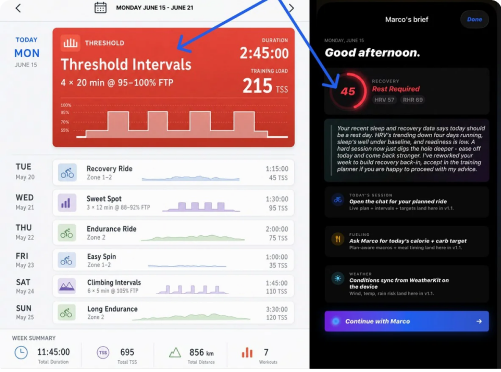
Your calendar was written on Sunday. It doesn’t know Tuesday happened. So after the bad night, the intervals are still there, and doing them is how a stalled rider becomes a wrecked one. The cleanest evidence there is came in 2019, when a group of sports scientists put well-trained cyclists on two plans for eight weeks: one written in advance and never changed, one adjusted every morning to how each rider had recovered. The adjusted group got faster. The fixed-plan group didn’t. Same hours, same work.
Eating the Same on a Rest Day as After a Long Ride
A rider on the TrainerRoad forum said what half the thread was thinking: “The nutrition is harder than the bloody workouts!” He had a plan for the riding and nothing for the fuelling. Food is the third input, and it’s the one nobody’s setup sees at all. Under-fuel the hard days and the training doesn’t turn into performance. Your plan can’t warn you, because your plan has never seen a meal.
See Food in the Number →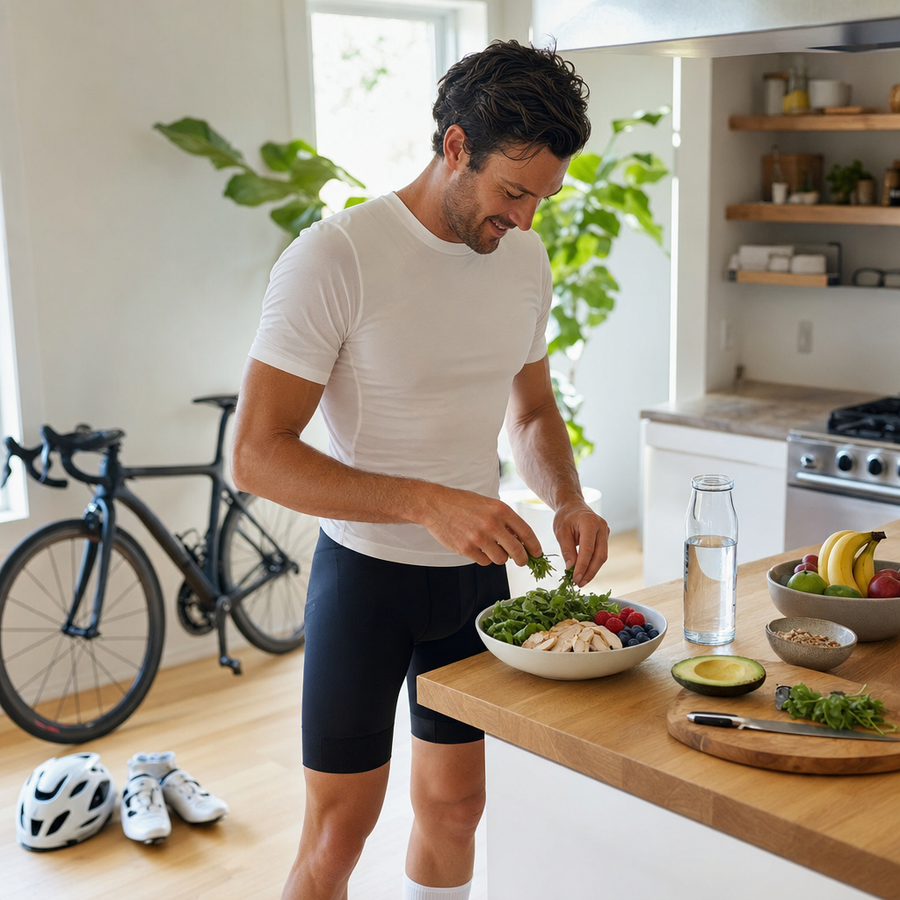
Making Every Day Medium
When you can’t tell which morning your body can take a hard session, every day drifts to the middle. Not easy enough to recover, not hard enough to adapt. It feels productive. It’s the most common shape of a flat year. Knowing which day is the hard day is a recovery question before it’s a training question.
See the Hard-Day Signal →
Believing a Device That Decides Nothing
Every device you own was built to record. Not one of them was built to decide. So the job of working out what tomorrow should be lands on you, and you’re guessing. A ring that’s on every night, an app that holds the plan and the food, and a coach that proposes tomorrow and waits for you to approve: that’s the first setup that decides with you instead of recording you.
Give It 30 Days →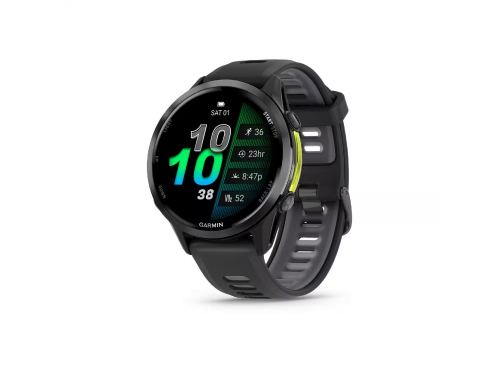
Meet HELIOS + THRIVE
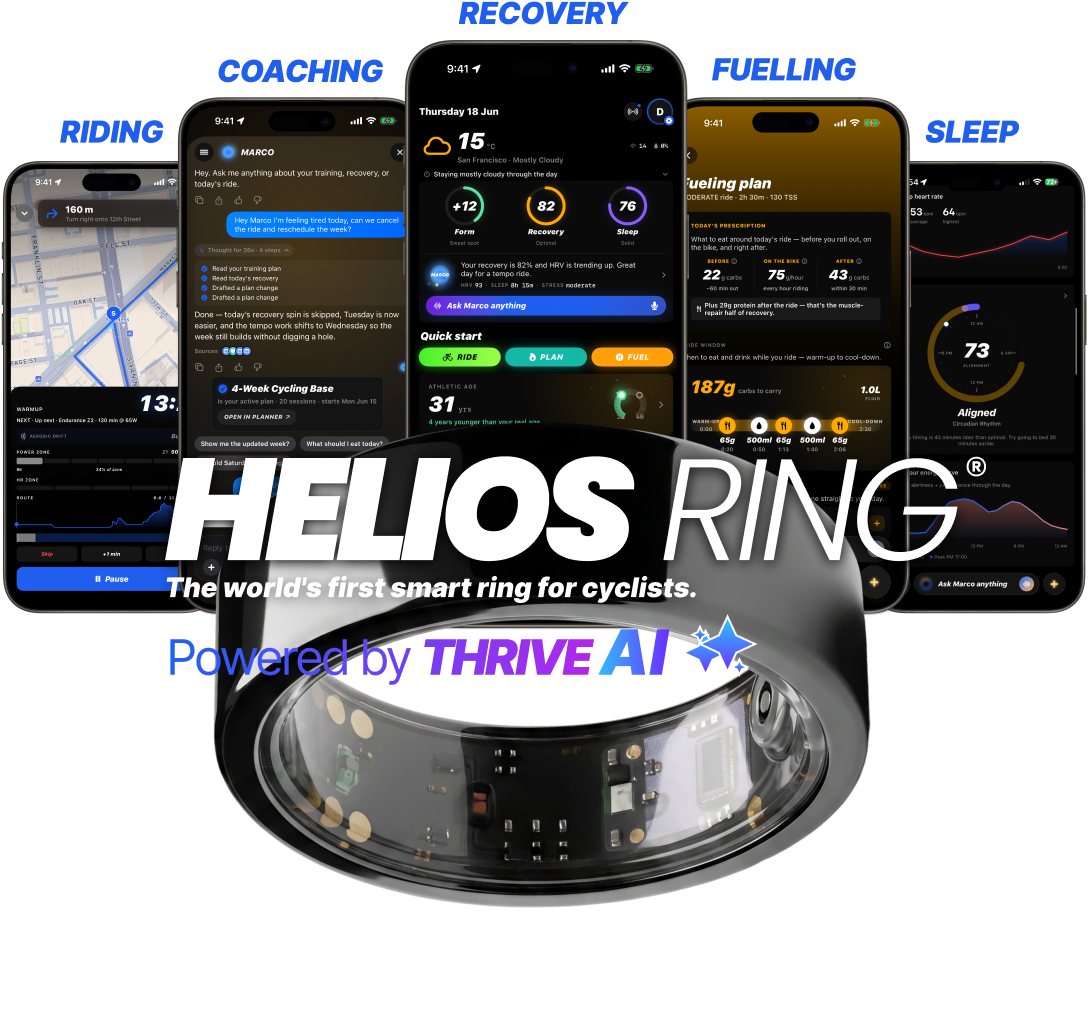
Everything those seven points asked for lives in one ring and one app.
In 2026 there was no product on the market that could see every necessary data point, tie it all together, and give you one consolidated feedback loop. So we built one.
HELIOS is a titanium ring small, light and comfortable enough that you’ll actually wear it 24/7. It reads your sleep, your heart-rate trends, your blood oxygen and your skin temperature every night, and feeds all of it straight into THRIVE. That’s the part that matters.
It’s the world’s first all-in-one system made specifically for cyclists. Instead of five devices that record you, one system that decides with you.
How many more blocks will you grind through to test the same?
Nothing about this fixes itself. More hours won’t show you what the other twenty-two hours of the day are doing. Every block you train blind costs you the same three things.
parts of recovery in one score: sleep, training load and food
nights read each week, because there’s no reason to take it off
of every day your bike computer never sees
between charges, about 90 minutes to refill
What changes when you can see your recovery
For a rider who has added hours and tested the same, the change isn’t subtle. Here is what’s different.
Sleep, training load and food sit in one picture, so a flat test comes with a reason, not a shrug.
The ring reads every night. A run of bad ones shows up in the morning score days before your legs give out.
Under the score: sleep, HRV, resting heart rate and the training load you’re carrying. Ask Marco why and he answers about this morning.
Daily calorie and carb targets are set from your training week. Log by photo, barcode, or just tell Marco.
After a rough night Marco proposes the swap. You see the exact change and approve it, or you don’t.
Easy when you haven’t recovered, hard when you have. Medium stops being the default.
What should you expect?
The first change is the first morning you know why.
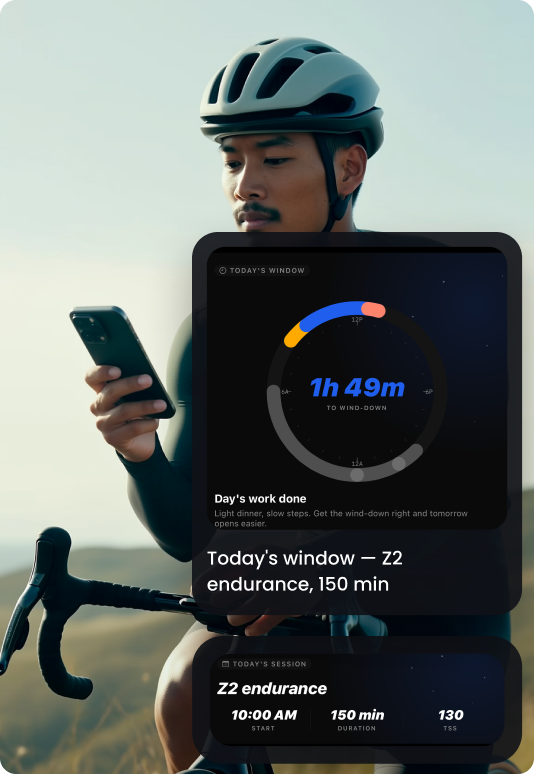
A plan built around you
The sizing kit confirms your size and the ring goes on. THRIVE asks your goal and the hours you actually have, builds your plan around them, and sets your daily calorie and carb targets from your weight, your training load and your goal.
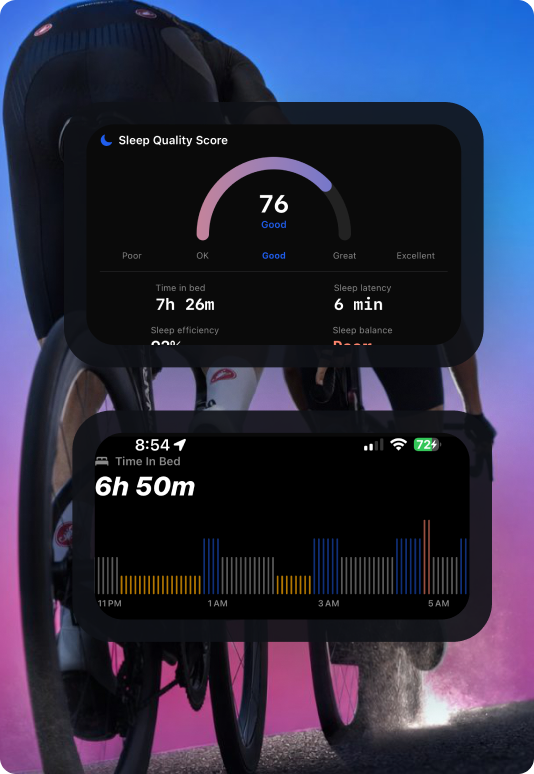
The reason behind the number
One recovery score, and underneath it what went in: sleep, HRV, resting heart rate, training load. For the first time you can see which one is holding you back.
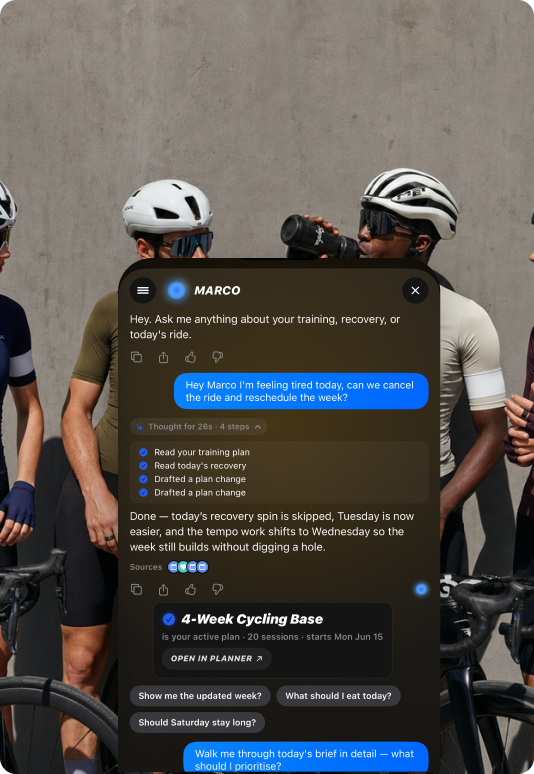
The first hard day you don’t force
The first rough night before an interval session, Marco proposes the swap and shows you the exact change. The hard day moves to a day your body can take it.
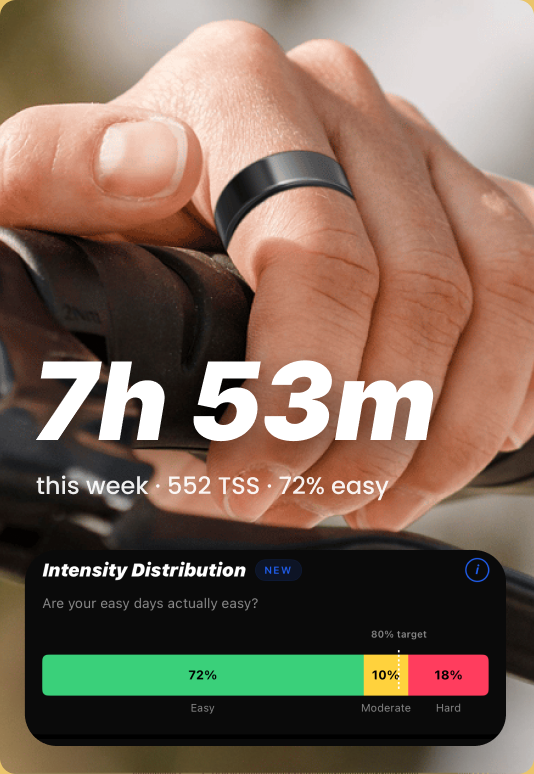
The pattern you couldn’t see
Thirty nights beside thirty days of riding and eating. The week your sleep dropped. The interval day you ate half the carbs. That’s why the number wasn’t moving. You have 30 days to decide if seeing that was worth it. If not, send it back.
What you see depends on how you train, sleep and eat. The ring measures and THRIVE plans. Neither promises a number.
What actually moves the number, measured
You’ve been adding hours. Researchers have measured what moves the number instead.
In 2019 researchers split well-trained cyclists into two groups for eight weeks. One followed a fixed plan. The other had each day’s session decided by that morning’s recovery reading. Only the second group improved: 7.3% in the time trial and 5.1% in peak power.
In 2019 Australian researchers had nine endurance cyclists and triathletes sleep more than eight hours a night for three nights. They rode the time trial in 56.8 minutes, against 58.7 on their normal sleep. Three short nights made them slower.
In 2014 two sports scientists pooled every controlled trial of taking in carbohydrate during exercise, 679 athletes in all. In 82% of them performance improved, and the longer the effort, the bigger the gain.
In 2014 researchers put well-trained endurance athletes on different training mixes. The ones who kept most days easy and a few days truly hard improved, including 11.7% in the most oxygen their body could use. The ones who trained medium-hard every day didn’t improve.
These are the researchers’ results in their own studies, not a promise from a ring. What HELIOS + THRIVE does is show you which of these four is holding your number down, and change the plan around it.
The two, side by side
Set the two next to each other and the gap is easy to see.
| Bike computer + training app | HELIOS + THRIVE | |
|---|---|---|
| Hours of your day it sees | About 2 | All 24 |
| Parts of recovery it sees | None of the 3 | 3 of 3: sleep, training load, food |
| After a bad night | The plan stays the same | A proposed change to today’s session |
| Fuel targets | A separate app, if any | Set from your training week |
| Devices and apps to run | 3 or more | 1 ring, 1 app |
Love it in 30 days — or your money back. Every dollar.
Ride it for 30 days. If it can’t tell you why you’re not getting faster, send it back for every penny.
Reaching number seven means one thing: you’re done guessing.
We built HELIOS because every cyclist we spoke to had the same problem, just reskinned in a different way, and not one of the devices they owned could tell them what it was. It’s not your legs. It’s not your age. It’s the twenty-two hours nothing was watching.
Free sizing kit ships first · Free shipping · 30-day money-back
Everything on this page, in one ring
The HELIOS titanium ring, the THRIVE app and Marco — the ride computer, training plan and fuelling all in one place.
CLAIM 45% OFF →30-day money-back guarantee. If it can’t tell you why you’re not getting faster, send it back.
The reviews are in
Real riders, in their own words.
“I added up my monthly software after reading something like this. Seventy-one dollars, on stuff I own outright.”
“Kept the Garmin for the map, binned everything else. The Sunday night admin is what actually disappeared.”
“First time anything I own has told me what to do instead of what I did.”
“One app. One answer. That was the whole appeal.”
“I’d been under-eating on interval days for two seasons. It told me in week two.”
“I stopped being the thing that joined it all together.”
Testimonials reflect individual experiences. Results vary.
Four questions riders ask first
Do I need this if I already follow a training plan?
A plan tells you what to do. It can’t see how you slept, what you ate or how much load you’re carrying, so it can’t tell you when to change. That’s the part HELIOS + THRIVE adds.
Is a ring enough for serious riding?
The ring measures around the clock. Your phone is the ride screen: climbs, estimated power, cadence, heart rate, routes and group rides. Power is estimated, so if you race on watts, keep the meter.
Will it change my plan without asking?
No. Marco proposes, you see the exact change, and nothing moves until you tap yes.
What if it doesn’t fit, or I don’t like it?
A free sizing kit ships first so the size is right. Then you have 30 days from delivery for a full refund.
Your next block can start from the whole picture
One ring, one app, and something that finally makes the call — with your approval.
Give it 30 nights →